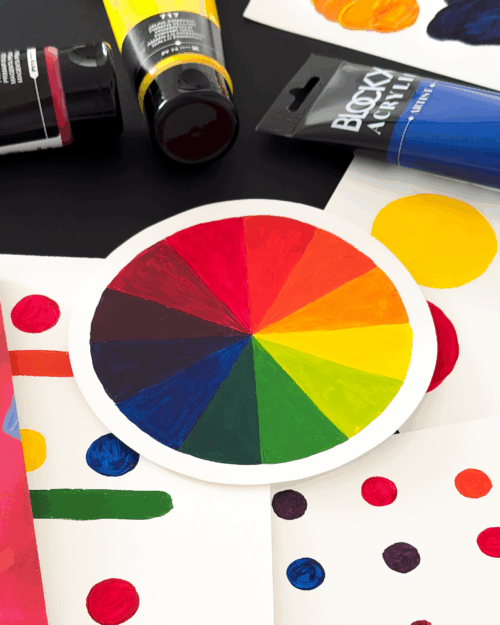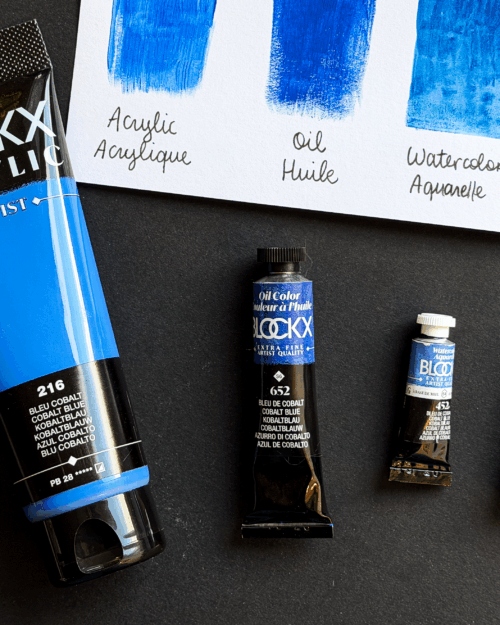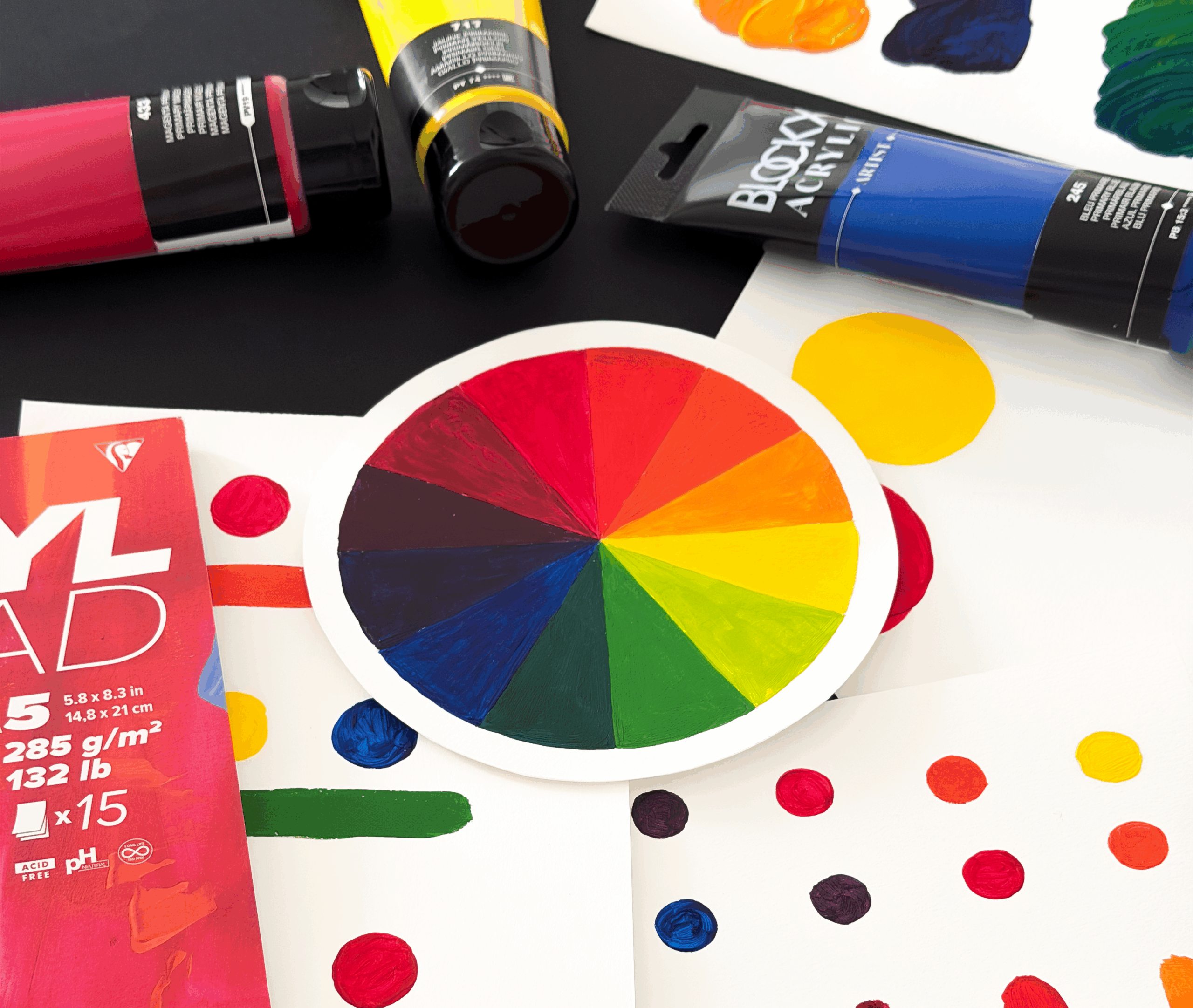
Color mixing is at the heart of acrylic painting. It allows you to create a rich, expressive palette that’s perfectly suited to your style. Unlike watercolor, acrylic paint is more opaque and has greater coverage, which directly affects how colors blend.
In this article, discover how to use primary colors to create secondary and tertiary colors, as well as tips specific to acrylics to master your color mixing.


What are the primary colors in acrylic paint?
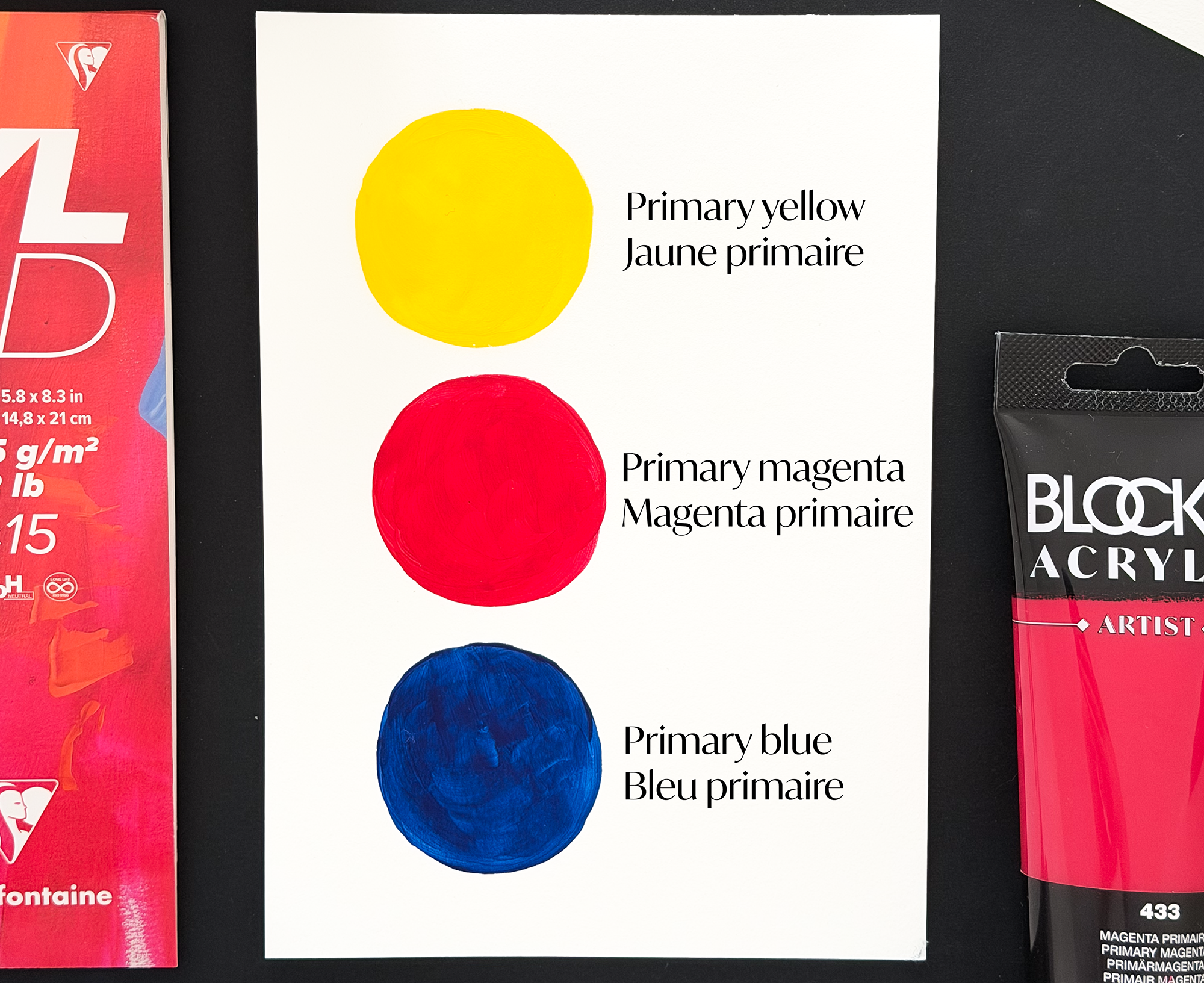
Primary colors are the foundation of any color palette. They cannot be created by mixing and are used to create all other shades.
In acrylic painting, the following are generally used:
- Red
- Yellow
- Blue
Depending on the pigments, you can also work with modern variants such as magenta, cyan, and yellow, which allow you to create brighter, more saturated blends.
In acrylic painting, the choice of primary colors is essential: pure colors will produce brighter blends, while colors that are already “tinted” will result in duller shades.

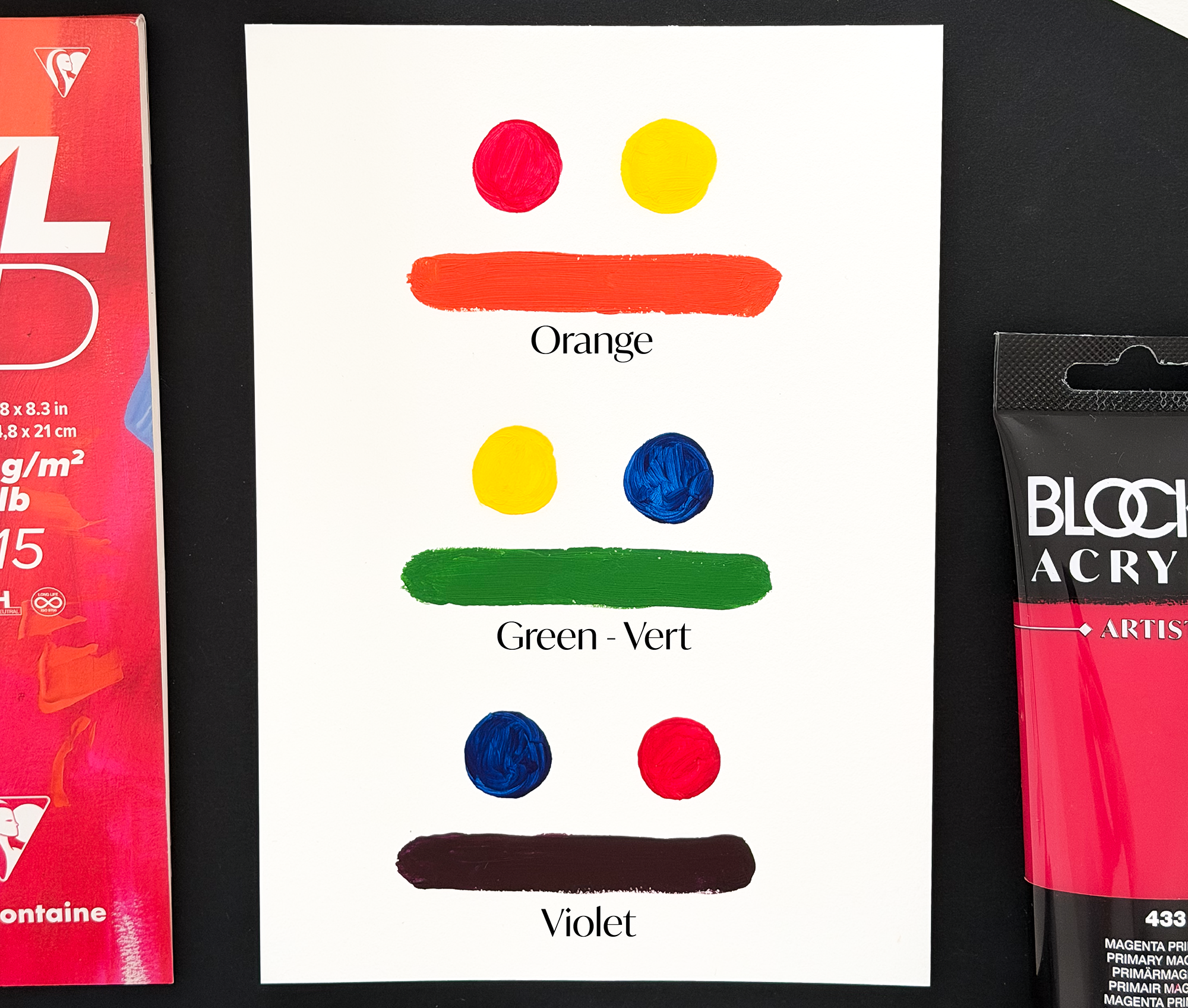
Creating secondary colors with acrylic paint
Secondary colors are created by mixing two primary colors in equal proportions.
Here are the basic color combinations:
- Orange : red + yellow
- Green : blue + yellow
- Violet : blue + red
Made with acrylic, these mixtures have a unique characteristic:
Because the paint has higher opacity, the colors can quickly become opaque and lose their brightness.
Tip: Build up your mixtures gradually and avoid overmixing to preserve vibrant colors.
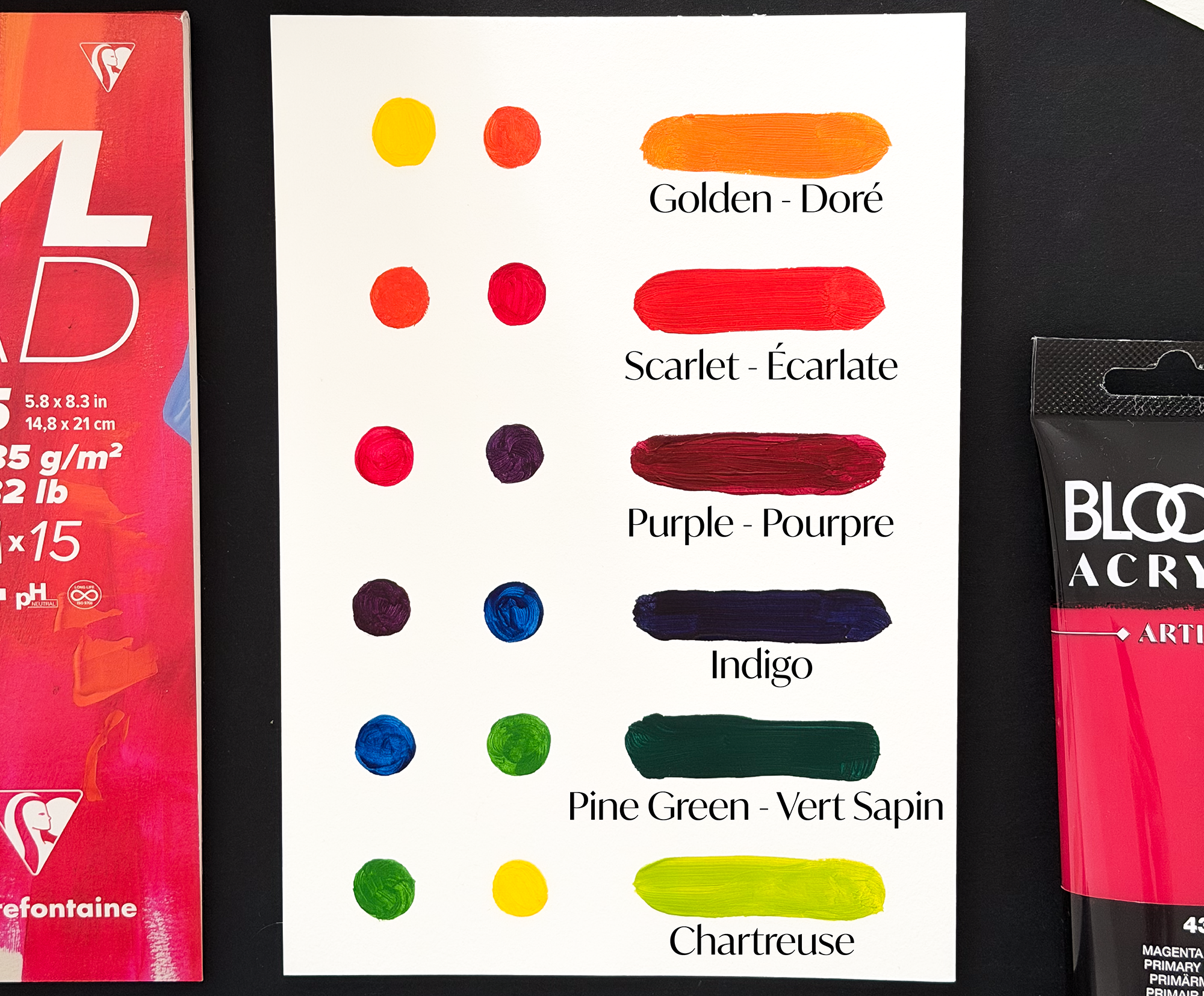
Exploring tertiary colors
Tertiary colors are created by mixing a primary color with a neighboring secondary color on the color wheel.
This results in more subtle shades such as:
- Yellow-orange
- Red-orange
- Red-violet
- Blue-violet
- Bleu-green
- Yellow-green
These shades are particularly useful in acrylic painting for:
- creating natural shadows
- enriching a color palette
- adding depth to a composition
Unlike watercolor, acrylic paint allows you to layer colors easily thanks to its opacity.
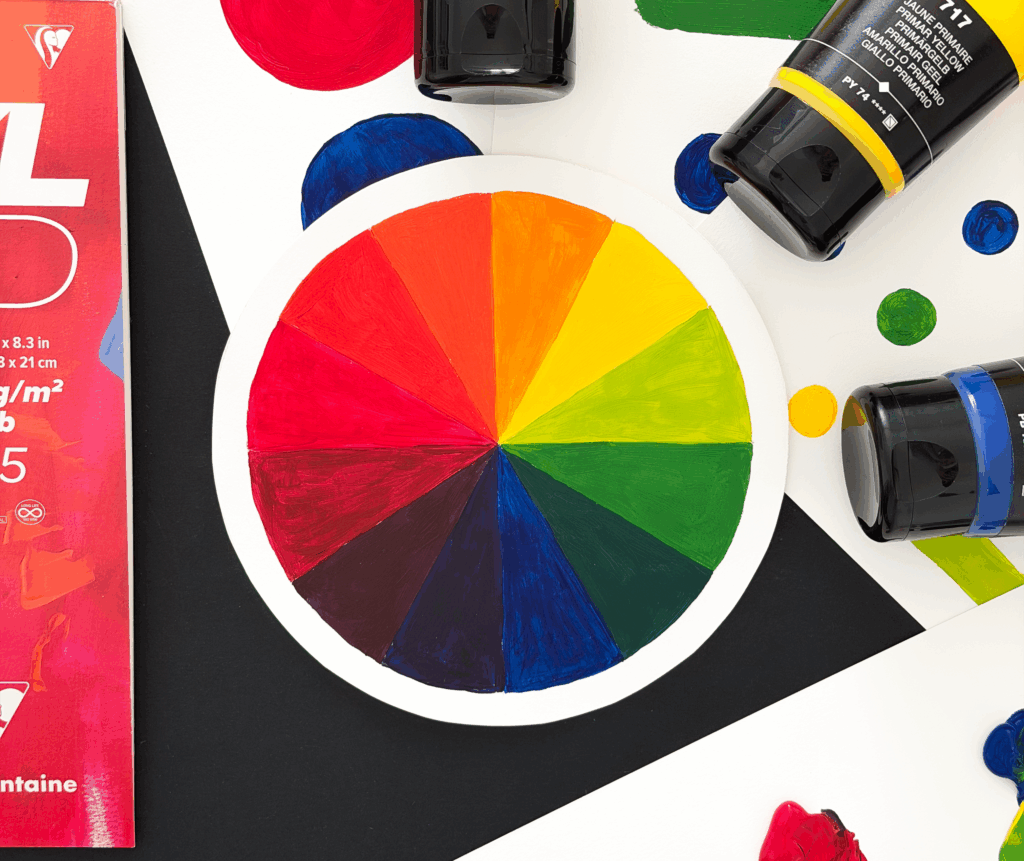
Practical Tips for Successful Acrylic Mixing
1. Choose high-quality basic colors
Pure pigments produce more intense and cleaner colors.
2. Work on the proportions
A slight variation can completely transform a shade:
more blue → a cooler color
more yellow → a warmer color
3. Pay attention to opacity
Acrylic paint covers quickly:
too much paint = a “muddy” color
too many layers = loss of brightness
4. Think in terms of temperature
Les couleurs chaudes (rouge, orange, jaune) et froides (bleu, vert, violet) influencent fortement le rendu final et peuvent même neutraliser une teinte si elles sont mal équilibrées.
5. Create your own color chart
Warm colors (red, orange, yellow) and cool colors (blue, green, purple) have a significant impact on the final result and can even cancel out a color if they are not properly balanced.
Conclusion
Mastering color mixing with acrylics is an essential skill for developing your creativity. Starting with primary colors, you can create an infinite palette of shades, from the brightest to the most subtle.
Thanks to its texture and coverage, acrylic paint offers great freedom for experimentation. By practicing regularly and observing your mixtures, you’ll refine your eye and gain precision to create works that are increasingly rich and harmonious.