Cobalt blue, or Thénard blue, is one of the most iconic and durable pigments in art history. Born from the union of chemistry and aesthetics, it has been captivating artists for over two centuries with its pure hue and exceptional lightfastness.
Ancient origins
Long before the invention of modern pigments, ancient civilizations were already aware of cobalt’s coloring power. Egyptian, Persian, Greek, and Chinese artisans used compounds based on this metal to color glass and enamels, particularly in blue Chinese porcelain and medieval European stained glass.
The word cobalt comes from the German term Kobold, the name given to mischievous spirits in mining folklore, accused of hiding deceptive ores containing this bluish metal in the rock.
The invention of Thénard’s blue
Modern cobalt blue was synthesized in 1802 by French chemist Louis Jacques Thénard, at the request of Interior Minister Jean-Antoine Chaptal, who wanted a more affordable substitute for ultramarine, which was then extracted from lapis lazuli.
Thénard discovered that by heating a mixture of cobalt monoxide and alumina to around 1200°C, he obtained a bright, pure, and stable blue: CoAl₂O₄, or cobalt aluminate.
Marketed from 1807 onwards, this pigment was a resounding success, particularly at the Manufacture de Sèvres, before being adopted by European painters under the name Thénard blue.
A favorite among artists
In the 19th century, cobalt blue became one of the Impressionists‘ favorite pigments. Renoir, Monet, and especially Van Gogh used it for its luminous qualities and its ability to render shadows without darkening them.
Van Gogh described this blue as a “divine color,” a symbol of harmony, depth, and inspiration. Its pure and constant brilliance allowed artists to capture the sky, the sea, or light with unprecedented intensity.
Properties and variations
With a slight purple tint, cobalt blue can vary depending on the proportion of alumina or the firing temperature. It is opaque, stable, low in toxicity, and exceptionally resistant to light and time: qualities that explain the freshness of the works in which it has been used.
In the 19th century, other variants emerged: cerulean blue, cobalt green, cobalt violet, cobalt red, and cobalt yellow, each resulting from the combination of cobalt with other metal oxides.
A symbol of science and prestige
More than just a pigment, cobalt blue marks a decisive step in the history of color: one where science puts its knowledge at the service of art.
From Thénard’s discovery to Van Gogh’s paintings, it embodies the promise of a synthetic color capable of matching, or even surpassing, the rarest natural gems.
Even today, it remains sought after for its balanced hue, exemplary stability and timeless aura, that of a blue that is both celestial and skillfully constructed.
Blockx, the continuity of an exceptional blue
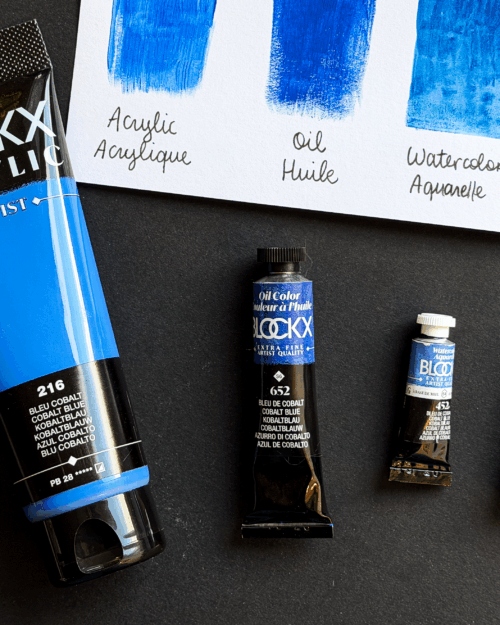
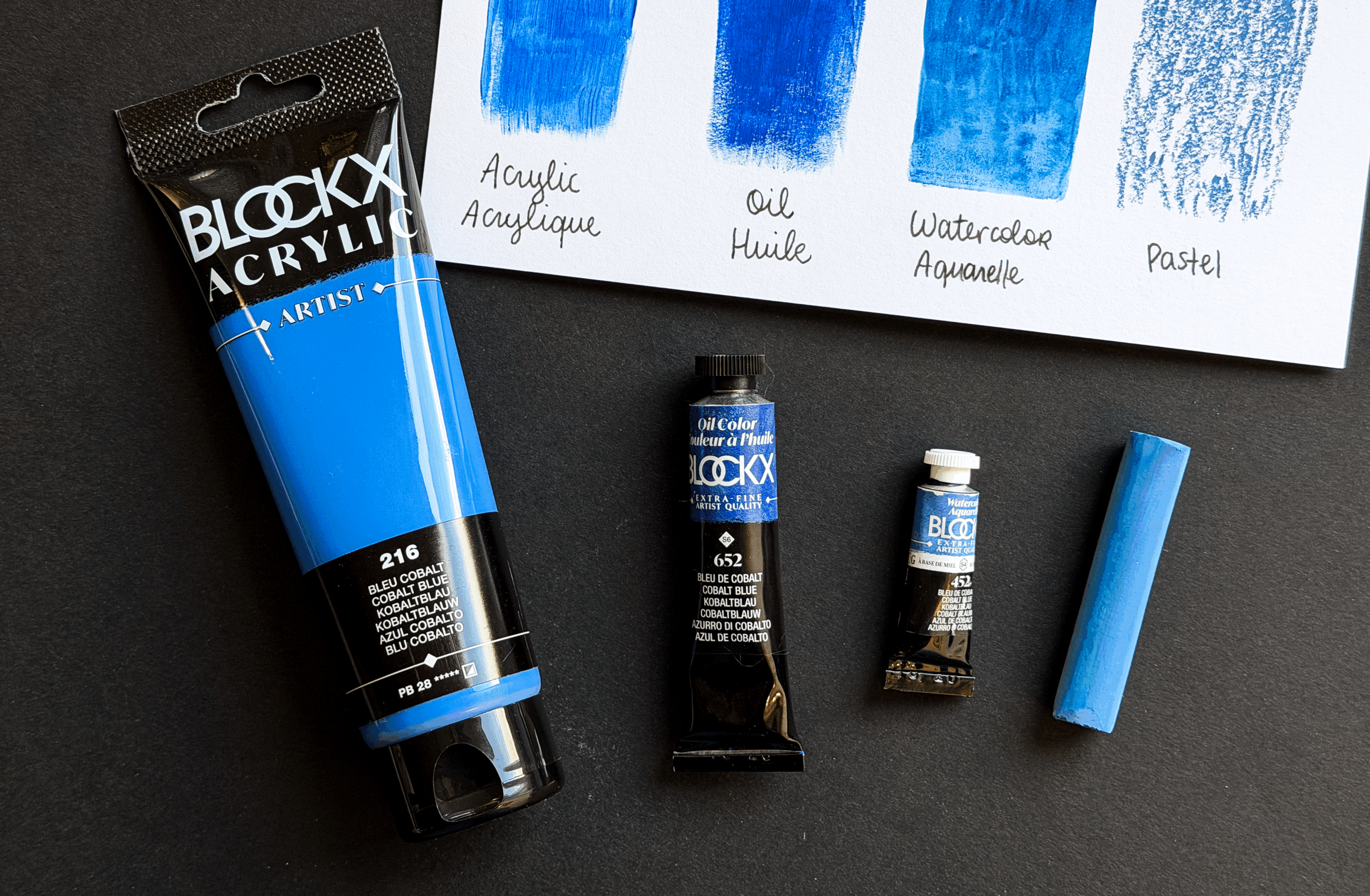
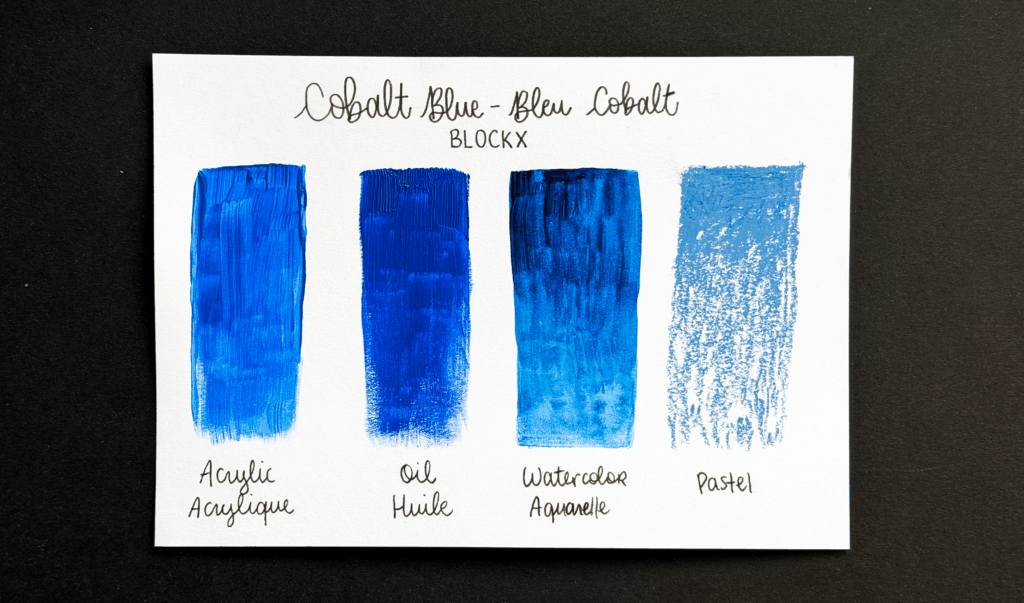
At Blockx, this heritage of cobalt blue is continued through demanding formulations designed for today’s artists. Available in acrylic, watercolor, pastel and oil, Blockx Cobalt Blue retains the depth, luminosity, and stability that have made this historic pigment famous. True to an approach that is both artisanal and scientific, the brand perpetuates the spirit of Thénard blue: a color constructed with rigor, in the service of expression, material, and artistic gesture.